FastApi
简介
FastApi 是一个基于 Python 的高性能 Web 框架,专门用于快速构建 API 接口服务。
- 原生支持异步
- Pydantic 类型提示与验证,减少手动校验代码
- 自动生成可交互式文档,浏览器中直接调用和测试 API
第一个 FastApi 程序
-
创建项目
隔离项目运行环境,避免依赖冲突,保持全局环境的干净和稳定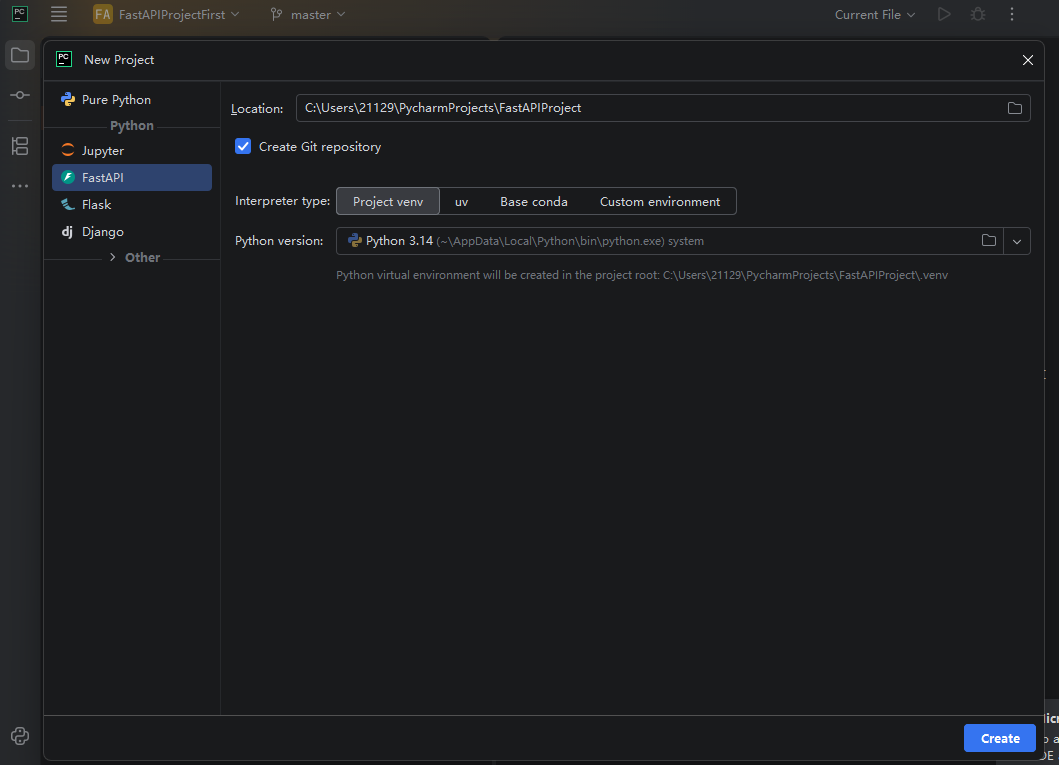
-
创建文件
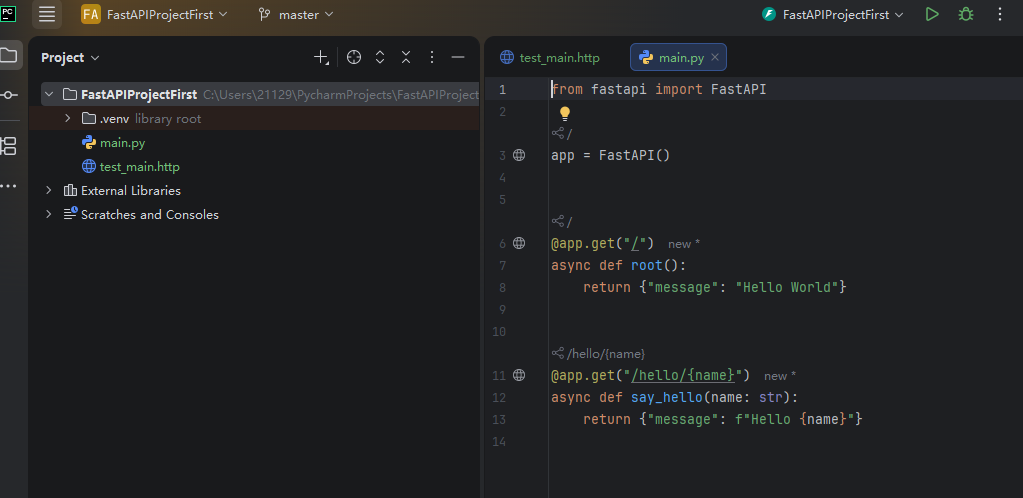
-
运行项目
通过 IDEA 运行项目
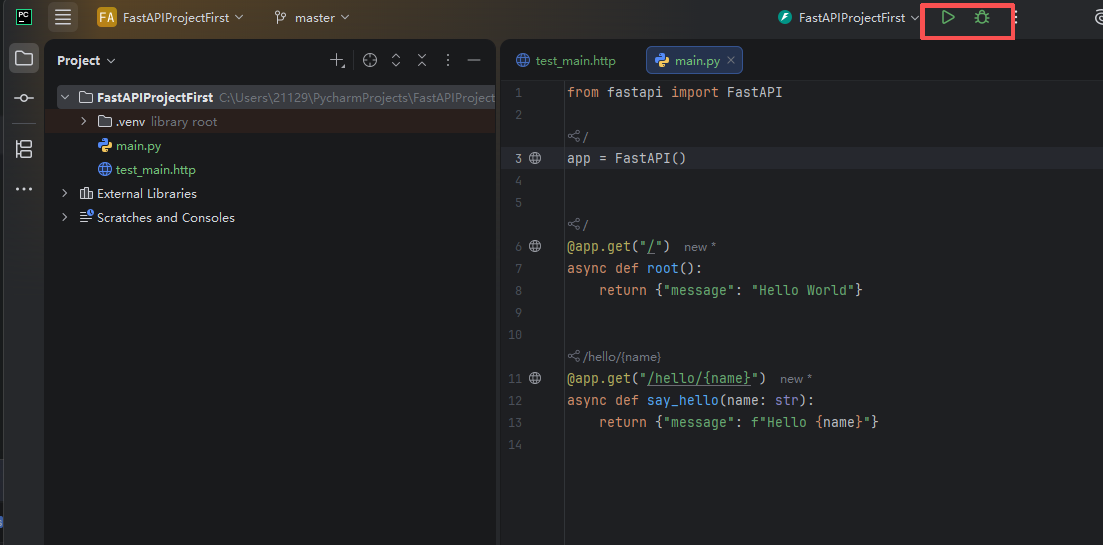
通过命令行运行项目
uvicorn main:app --reloaduvicorn是一个 ASGI 服务器,用于运行 FastApi 应用main:app表示运行main.py文件中的app对象` 指定 FastApi 应用--reload表示开启自动 reload 功能,代码修改后自动重启服务器
-
运行项目,访问 http://127.0.0.1:8000/docs
路由
路由是 URL 地址和处理函数之间的映射关系,它决定了当用户访问某个特定网址时,服务器应该执行那段代码来返回结果。
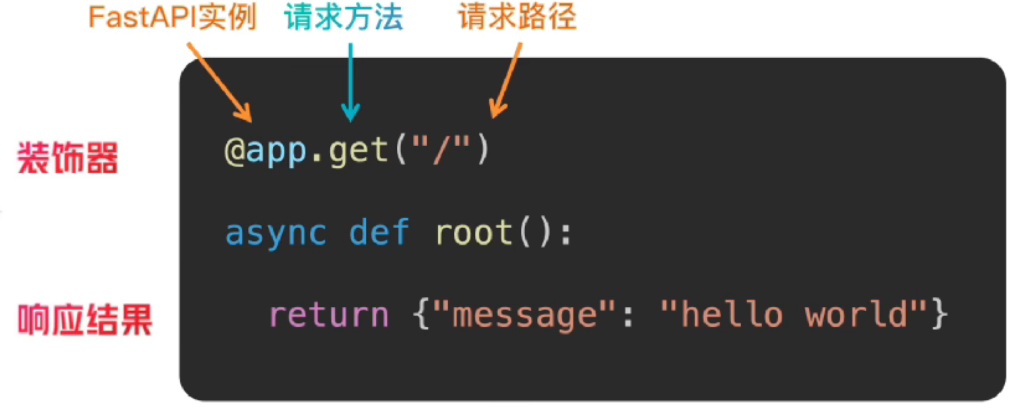
参数简介和路径参数
同一段接口逻辑,根据参数不同返回不同的数据

参数就是客户端发送请求时附带的额外信息和指令
参数的作用是让同一个接口能根据不同的输入,返回不同的输出,实现动态交互。
路径参数
- 位置:URL 路径的一部分
/book/{id} - 作用:指向唯一的、特定的资源
- 方法:GET
@app.get("/hello/{name}")
async def say_hello(name: str):
    return {"message": f"Hello {name}"}
FastApi 允许为参数声明额外的信息和校验(使用 Path 函数)
| Path 参数 | 说明 |
|---|---|
| ... | 必填 |
| gt/ge | 大于/大于等于 |
| lt/le | 小于/小于等于 |
| description | 描述 |
| min_length | 长度限制 |
| max_length |
@app.get('/book/{id}')
async def get_book(id: int = Path(...,gt=0,lt=101,description='书籍的ID')):
    return {"id":id , "title": f"这是第{id}本书"}
查询参数
声明的参数不是路径参数时,路径操作函数会把该参数自动解释为查询参数
- 位置:URL ? 之后,k1 = v1&k2 = v2
- 作用:对资源集合进行过滤、排序、分页等操作
- 方法:GET
@app.get('/news/news_list')
async def get_news_list(skip:int, limit:int = 10):
    return {"skip":skip,"limit":limit}
使用 Query 类型注解可以为查询参数添加额外信息和校验(使用 Query 函数)
@app.get('/news/news_list')
async def get_news_list(skip:int = Query(0,description='跳过多少条数据'), limit:int = Query(10,description='每页多少条数据')):
    return {"skip":skip,"limit":limit}
请求体参数
-
位置:HTTP 请求的消息体
{body}中 -
作用:创建、更新资源、携带大量数据,如 JSON
-
方法:POST、PUT 等
- 定义类型
from pydantic import BaseModel

class User(BaseModel):

username: str

password: str
- 类型注解
@app.post('/register')

async def register(user: User):

    return user
from pydantic import BaseModel,File
class User(BaseModel):
    username: str = Field(...,min_length=3,max_length=50,description='用户名')
    password: str = Field(...,min_length=3,max_length=50,description='密码')
    avatar: File
响应类型
默认情况下,FastAPI 会自动将路径操作函数返回的 Python 对象(字典、列表、Pydantic 模型等),经由 jsonable_encoder 转换为 JSON 兼容格式,并包装为 JSONResponse 返回,这省去了手动序列化的步骤,让开发者能更专注于业务逻辑。
如果要返回非 JSON 数据(如HTML、文件流),FastAPI 提供了丰富的响应类型来返回不同数据。
| 响应类型 | 用途 | 示例 |
|---|---|---|
| JSONResponse | 默认响应,返回JSON数据 | return {"key": "value"} |
| HTMLResponse | 返回HTML内容 | return HTMLResponse(html_content) |
| PlainTextResponse | 返回纯文本 | return PlainTextResponse("text") |
| FileResponse | 返回文件下载 | return FileResponse(path) |
| StreamingResponse | 流式响应 | 生成器函数返回数据 |
| RedirectResponse | 重定向 | return RedirectResponse(url) |
设置方式
-
在装饰器中指定响应类,适合固定返回类型(HTML、纯文本)
@app.get('/html',response_class=HTMLResponse)

async def html():

return '<h1>Hello World666</h1>' -
返回响应对象(文件下载、图片、流式响应)
# FileResponse 是 FastAPI 提供的专门用于高效返回文件内容(如图片、PDF、Excel、音视频等)的相应类。它能够智能处理文件路径、媒体类型推断、范围请求和缓存头部,是服务静态文件的推荐方式。

@app.get('/file')

async def file():

file_path = '16479213397724544.png'

return FileResponse(file_path)
自定义响应数据格式
response_model 是路径操作装饰器(如 @app.get 或 @app.post) 的关键参数,它通过第一个 Pydantic 模型来严格定义和约束 API 端点的输出格式。这一机制在提供自动数据验证和序列化的同时,更是保障数据安全性的第一道防线。
class News(BaseModel):
    id: int
    title: str
    content: str

@app.get("/news/{id}",response_model=News)
async def get_news(id:int):
    return {
        "id":id,
        "title": f"这是第{id}本书",
        "content": "这是一本好书"
    }
异常处理
对于客户端引发的错误 (4xx,如资源未找到、认证失败),应使用 fastapi.HTTPException 来中断正常处理流程,并返回标准错误响应。
@app.get('/news1/{id}')
async def get_news(id:int):
    id_list = [1,2,3,4,5,6]
    if id not in id_list:
        raise HTTPException(status_code=404,detail='当前id不存在')
    return {"id":id}
中间件
使用中间件为每个请求前后添加统一的处理逻辑
- 多个接口都需要验证用户身份
- 多个接口都需要记录日志、性能数据
- 跨域处理
- 响应头处理
中间件(Middleware)是一个在 每次请求进入 FastAPI 应用时都会被执行的函数。 它在请求到达实际的路径操作(路由处理函数)之前运行,并且在响应返回给客户端之前再运行一次。
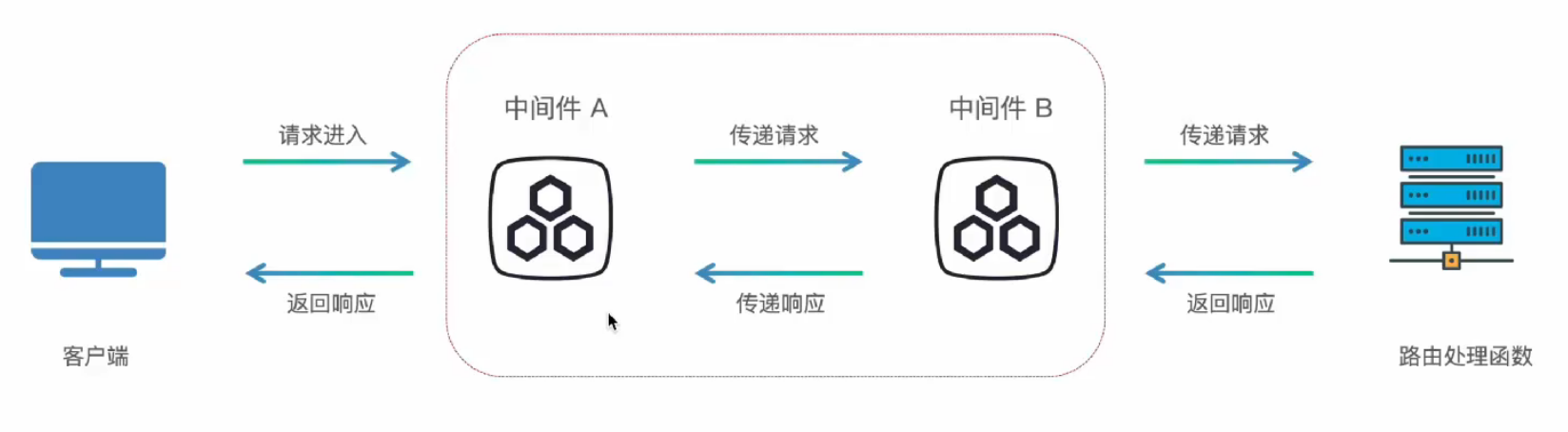
中间件的函数顶部使用装饰器 @app.middleware('http')
# request 是请求, call_next 是传递请求的

@app.middleware('http')
async def middleware1(request,call_next):
    print('中间件1 start')
    response = await call_next(request) # 传递请求,返回响应
    print('中间件1 end')
    return response


@app.middleware('http')
async def middleware2(request,call_next):
    print('中间件2 start')
    response = await call_next(request) # 传递请求,返回响应
    print('中间件2 end')
    return response
依赖注入
通过依赖注入系统来共享通用逻辑,减少代码重复。比如分页逻辑
中间件控制所有请求,包括静态文件请求。
- 依赖项: 可重用的组件(函数/类),负责提供某种功能或数据
- 注入: FastAPI 自动帮忙调用依赖项,并将结果注入到路径操作函数中。
# 分页参数逻辑公用:新闻列表和用户列表
# 1. 依赖项
async def common_parameters(
        skip: int = Query(0,ge= 0),
        limit: int = Query(10,le=60),
):
    return {'skip':skip,'limit':limit}
# 3. 声明依赖项 - 注入依赖
@app.get('/news/news_list')
async def get_news_list(commons = Depends(common_parameters)):
    return commons

@app.get('/user/user_list')
async def get_user_list(commons = Depends(common_parameters)):
    return commons
应用场景
- 处理请求参数: 从请求中提取和验证参数
- 共享业务逻辑:抽取封装多个路由公用的逻辑代码
- 共享数据库连接: 管理数据库会话的创建、使用、关闭
- 安全和认证:验证用户身份、检查权限和角色要求等。